Independent planning tools for U.S. homeowners • Estimates are for budgeting, not contractor quotes
Energy Assessments & Upgrades
Home Energy Audit Cost Guide

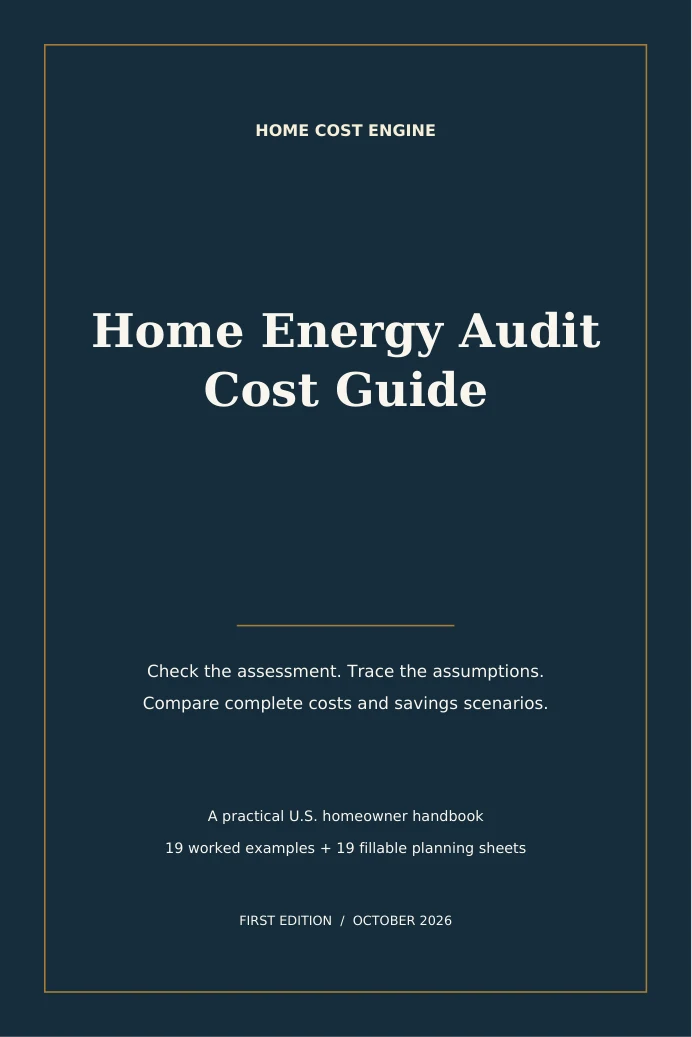
Home Energy Audit Cost Guide book cover

Original first edition · HomeCostEngine Editorial Team · Reviewed October 25, 2026

▤64 pagesDetailed PDF
⇩Instant downloadAfter secure checkout
▦95 fillable fields19 printable worksheets
£14.99GBP • one-time purchase
Preview 3 sample pages before buying

A 64-page energy assessment and upgrade guide with 19 worked examples and 19 fillable worksheets. Compare audit scope, bill baselines, complete upgrade packages, funding assumptions and outcome records.

64-page PDFInstant digital deliveryOne-time purchase
Check the evidence behind the savings claim

Why buy this home energy planning guide?

An audit fee, equipment price and projected saving answer different questions. This guide helps you connect the assessment and complete scope to traceable bill assumptions, realistic funding and an outcome-review record.

  • Compare the actual assessment scope. Record deliverables, provider evidence, limitations and recommendation assumptions.
  • Check the financial scenarios. Separate usage, tariffs, package interactions, verified benefits and simple-payback sensitivity.
  • Keep the whole project connected. Include supporting work, phases, upfront cash, qualified completion and actual outcome review.

Who will get the most from it?

U.S. homeowners choosing a professional energy assessment or comparing assessed upgrade packages. Actual qualified providers must establish technical needs, design, installation and suitable performance analysis.

What does the paid guide add to a calculator?

It connects cost arithmetic to assessment, baseline, recommendation, package and outcome records, with 19 worked cases, 19 worksheets and 95 fillable fields.

See the real pages first → Get the complete PDF for £14.99 →

One-time purchase. No subscription. Example costs, savings and tariffs are hypothetical. No audit price, program eligibility, bill saving, payback or financial return is promised.

What this guide helps you do

  • Define and compare professional assessment deliverables
  • Build an actual-bill baseline with units and context
  • Separate tariffs, weather, occupancy and comfort outcomes
  • Compare complete packages without adding overlapping claims
  • Verify benefit assumptions and review cash, payback and actual outcomes

Built for real project planning

HomeCostEngine field guides are designed to sit beside measurements, contractor proposals and the free calculators on this site. The goal is not to give you one magic price. It is to help you define scope, identify assumptions and ask better questions before money is committed.

Use this guide for personal planning and pair it with the relevant HomeCostEngine calculators and cost guides.

Inside the actual 64-page edition

This original handbook follows a complete planning sequence: preface, assessment scope, actual bills, tariff and context records, recommendations, coordinated packages, verified funding assumptions and outcome review. Chapters 2–20 each contain an explanation, an accurately worked hypothetical example and a dedicated planning sheet. The PDF has 95 fillable text fields across 19 worksheets, plus printable space for handwritten notes. Fields do not calculate automatically.

Read the free assessment comparison checklist and worked example →

Try the method before buying

A fictional $8,000 complete project cost divided by an assumed $500 net annual saving gives 16 years simple payback. At an assumed $800 annual saving, it gives 10 years. The six-year difference comes only from the saving input; neither result predicts actual performance or equipment life.

Use the free HomeCostEngine calculators for individual quantities and the quote comparison calculator with complete matched scope. Retain the actual assessment and model assumptions.

Complete chapter list

  1. Preface: how to use this book
  2. Define the home energy improvement brief
  3. Request the right assessment and report
  4. Build a baseline from actual bills
  5. Separate consumption from tariff and fixed charges
  6. Record weather, occupancy and comfort context
  7. Turn report recommendations into decision records
  8. Coordinate envelope and comfort-system decisions
  9. Compare equipment as complete installed alternatives
  10. Include electrical readiness and other supporting work
  11. Avoid double-counting combined savings
  12. Verify incentives before calculating net cost
  13. Use simple payback with sensitivity
  14. Connect phases, upfront cash and future benefits
  15. Verify handover and review actual outcomes
  16. Build the all-in home energy upgrade budget
  17. Normalize contractor proposals
  18. Review the live cost forecast
  19. Approve changes and reconcile the reserve
  20. Close out and retain project records
  21. Afterword and source notes

What the examples cover

Work through matched audit fees, daily-use baselines, tariff-versus-consumption effects, assessment gates, coordinated scope, shared support, package savings assumptions, unverified incentives, payback sensitivity, early cash gaps and final obligations. Six general owner-budget chapters use the HomeCostEngine renovation method with energy adaptation; thirteen chapters add energy decisions. No technical audit, installation, tax-eligibility determination or causal savings method is supplied.

What you receive after payment

One 64-page English PDF, formatted at 6 × 9 inches, with a clickable chapter outline and 19 printable, fillable planning sheets. After payment, the order page provides your download and our thank-you email contains a link to that order page. Use a compatible PDF reader, save a local copy before entering information and confirm your saved entries persist. No separate account or subscription is required.

The book purchase is £14.99 GBP. Project examples use hypothetical USD amounts because the planning guidance is for U.S. homeowners. They are teaching examples, not local price benchmarks.

Editorial scope and sources

Written by the HomeCostEngine Editorial Team and reviewed October 25, 2026. Source notes link to FTC: Home Repair Scams, Department of Energy: Professional Home Energy Assessments, ENERGY STAR: Home Upgrade planning resources, IRS: Energy Efficient Home Improvement Credit. These organizations do not endorse the book.

This handbook organizes planning decisions; it does not replace a site inspection, engineering design, professional installation, local permit review or a written contractor agreement. Personal use includes printing worksheets and sharing your completed project records with your contractors and advisers.

Planning note: This PDF is educational information, not a contractor bid, engineering opinion, legal advice or code approval. Verify project-specific requirements with qualified local professionals.
Questions & updates

Need help using this guide?

Email reports@homecostengine.com with the book title and enough project detail for us to understand your question.

Join the HomeCostEngine email list →

Stay current

Subscribe for new calculators, updated homeowner guidance and new digital-book releases. You can unsubscribe from marketing emails at any time.

Actual PDF pages

Read three pages before buying.

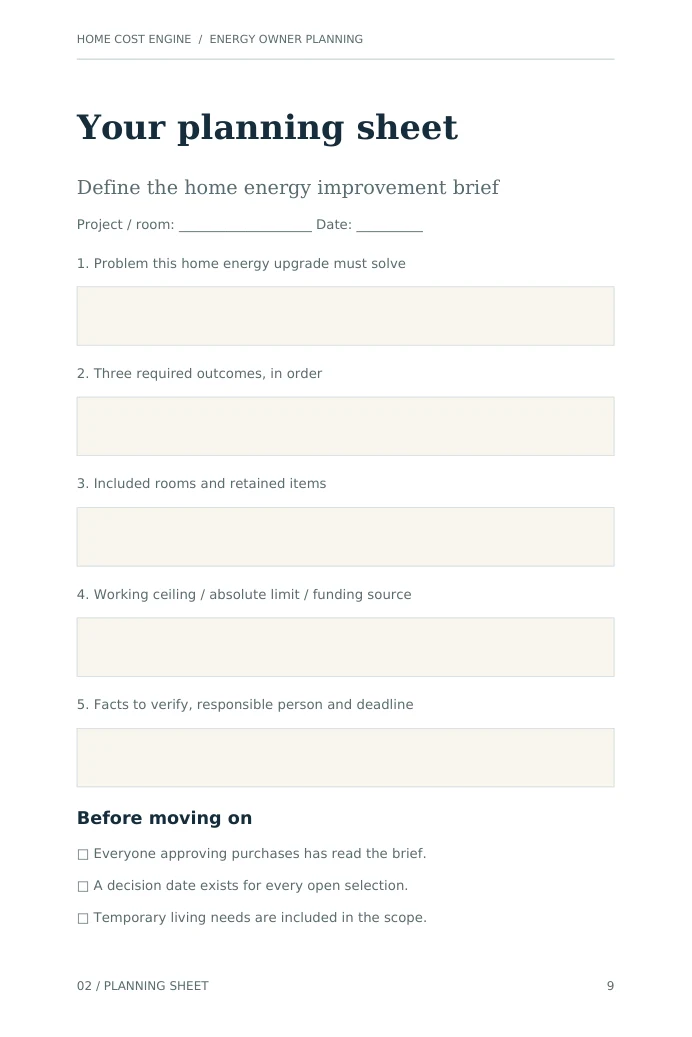
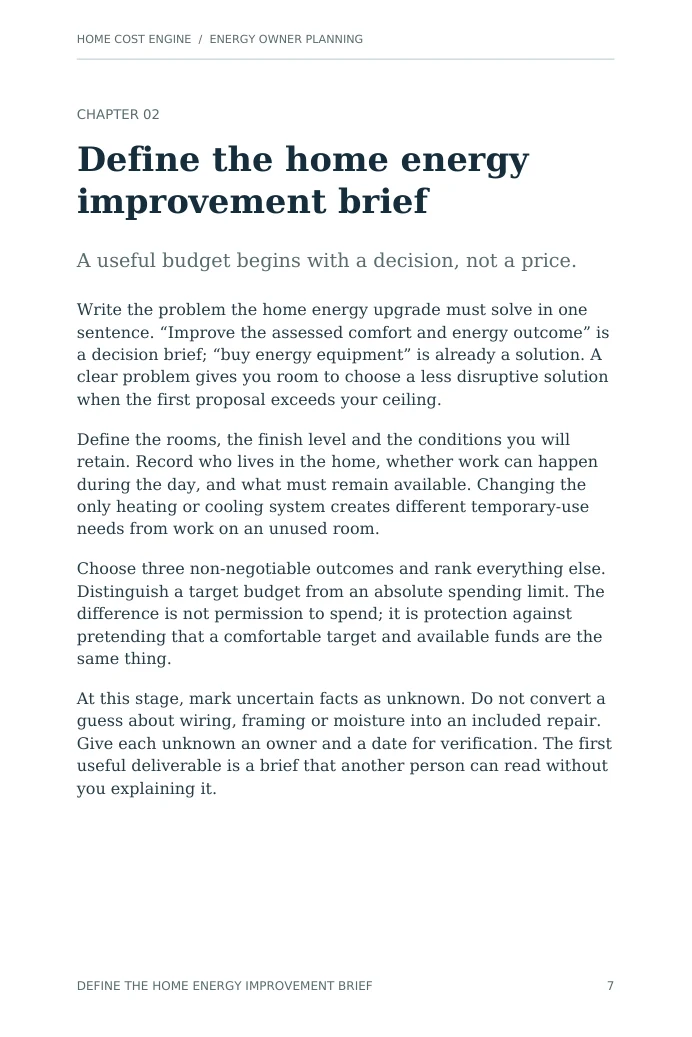
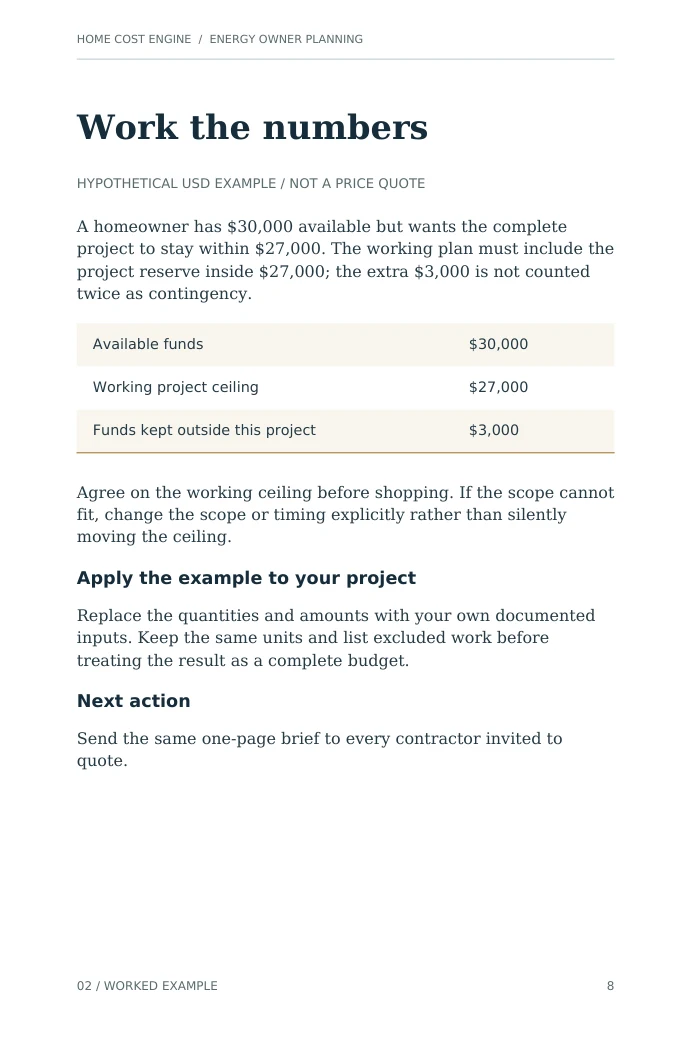
Pages 7–9 from the full edition: the first planning chapter, its example and its fillable worksheet. Select a page to open a readable full-size image.
Actual PDF page 7: Define the project

Page 7: Define the project

Actual PDF page 8: Work the example

Page 8: Work the example

Actual PDF page 9: Complete your planning sheet

Page 9: Complete your planning sheet

The sample images are the actual published pages. The complete PDF is delivered through purchase verification.

Get the complete guide

Home Energy Audit Cost Guide

64-page digital PDF • instant delivery after Stripe checkout

Chat on WhatsApp