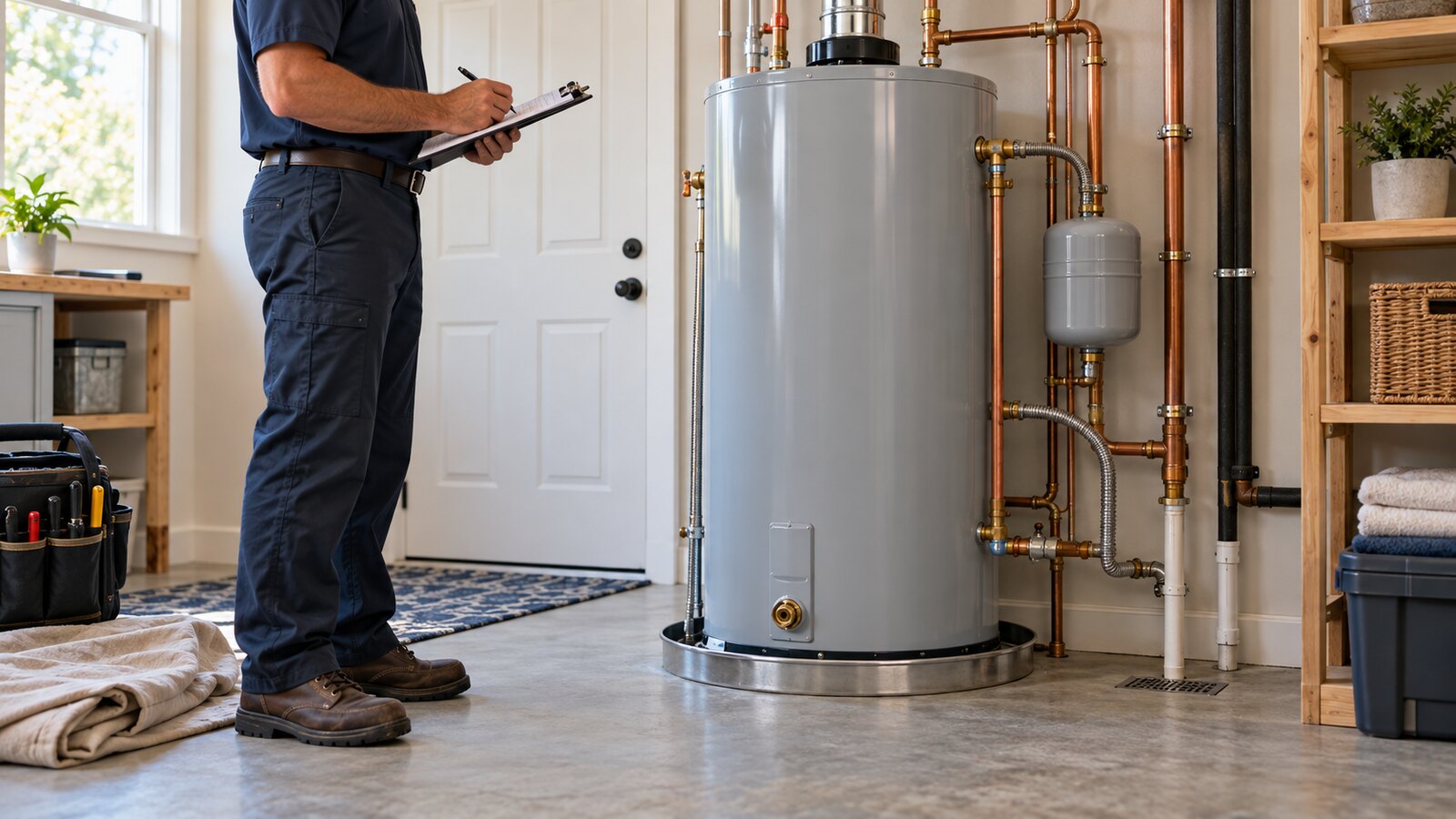
Quick answer: water heater replacement cost is the sum of the selected unit, removal, disposal, plumbing connections, fuel or electrical work, venting, safety components, permit and startup. A like-for-like replacement in an accessible location is the low-scope case. A capacity change, fuel conversion, tankless conversion or heat-pump installation can require a broader scope. Compare written installed scopes rather than appliance prices alone.
Before comparing installed prices, use the first-hour-rating and peak-demand sizing guide to check whether each bidder specified enough hot-water delivery for the household.
Before pricing replacement, confirm that replacement is the recommended decision. A thermostat, heating element, burner component or valve may be repairable, while leakage through the tank body usually changes the economics. Use the water heater repair-versus-replacement guide to separate the diagnosis from the project budget.
What belongs in a complete replacement budget?
A useful estimate separates known scope from possible scope. Known scope includes the model, capacity, delivery, removal, ordinary connections, startup and cleanup. Possible scope covers conditions that cannot be confirmed until the existing unit is disconnected or the installation is inspected closely.
| Budget component | What to define |
|---|---|
| Equipment | Storage, tankless or heat-pump type; fuel; capacity; efficiency; warranty |
| Basic labor | Disconnect, remove, set, reconnect, fill, test and commission |
| Plumbing | Shutoff, connectors, transitions, drain pan, drain route and expansion control |
| Gas and venting | Gas supply, combustion air, flue material, route and clearances |
| Electrical | Circuit, breaker, disconnect, wiring and service capacity |
| Site work | Access, platform, protection, hauling, disposal and restoration |
| Compliance | Permit, inspection and locally required safety or seismic provisions |
Low, typical and high planning logic
Low scope: a like-for-like unit with compatible capacity and fuel in an accessible location. Existing piping, venting or electrical service is serviceable, and associated drainage and shutoffs fit the approved scope. Budget mainly for equipment, ordinary labor, disposal and permit where required.
Typical scope: several connection updates such as a new shutoff, drain-pan work, expansion control, modest vent or electrical changes, or difficult removal. The technology remains similar, but associated components must be included.
High scope: a technology or fuel conversion, relocation, major gas or venting work, a new electrical circuit, service upgrades, structural access, water damage, or a tankless system that needs larger utility connections. Price these as separate line items rather than hiding them inside one allowance.
Worked example: normalize three quote formats
Assume a homeowner receives three illustrative quotes for the same storage unit. Quote A lists $2,450 but excludes permit, disposal and replacement of a corroded shutoff. Quote B lists $2,850 and includes all three. Quote C lists $2,600, includes disposal and the shutoff, but carries a $350 permit allowance.
- Quote A: $2,450 + $180 permit + $125 disposal + $190 shutoff = $2,945 normalized total.
- Quote B: $2,850 normalized total because its stated scope is included.
- Quote C: $2,600 + $350 permit allowance = $2,950 normalized total.
These are arithmetic examples, not market prices. They show why the lowest headline total may not be the lowest complete scope. Enter each line item in the Contractor Quote Comparison Tool and keep allowances visibly separate from fixed work.
Tank, tankless or heat pump?
A standard storage replacement is often easiest to compare when it matches existing fuel and connection requirements. Tankless equipment is sized by flow rate and temperature rise, not stored gallons, and conversion can require gas, venting, condensate or electrical work. A heat-pump water heater can reduce energy use, but installation conditions matter.
ENERGY STAR advises checking installation space, surrounding temperature, air volume, capacity and contractor requirements before selecting a heat-pump unit. Its guidance notes that these units need suitable interior conditions and condensate planning. Compare the full installed scope and household demand, not efficiency labels alone.
Capacity: start with demand
The current tank size is a starting point, not an automatic answer. Consider household size, simultaneous showers, tubs, laundry, dishwasher use, fixture changes and recovery performance. For storage units, compare first-hour delivery as well as gallons. For tankless equipment, document simultaneous flow and required temperature rise. Ask each bidder to state the sizing assumption so proposals use the same demand.
Regional and permit caveats
Installed scope varies because labor markets, fuel availability, utility rules and locally adopted codes differ. Cold incoming water can increase required temperature rise. Garages, attics, closets, basements and exterior locations create different access, drainage, combustion and freeze-protection questions.
Permit requirements also vary. A like-for-like replacement may be handled differently from relocation, fuel conversion or new circuit work. Ask the local building department whether a permit and inspection are required, then make responsibility explicit. Do not assume a national cost range includes local compliance.
Scope inclusions and exclusions
Confirm delivery, access, floor protection, removal, disposal, ordinary piping, shutoffs, connectors, venting, drain pan, drain route, expansion control, seismic restraint where required, condensate, gas work, electrical work, permit, startup and cleanup.
Common exclusions include concealed water damage, mold assessment, structural repair, utility upgrades, hazardous-material work and finish repair. If moisture has appeared, use the hidden water-leak checks before assuming the tank itself has failed.
Build contingency from uncertainty
List uncertain items, shutoffs, vent route, electrical capacity, access, corrosion and water damage, then assign an allowance only where the condition cannot be confirmed. Model those items with the Project Contingency Calculator. Keep this project reserve separate from the annual reserve planned with the Home Maintenance Budget Calculator.
Homeowner checklist
- Obtain the diagnosis and identify the failed component or leak.
- Give every bidder the same demand and location information.
- Request model, capacity, fuel, efficiency and warranty in writing.
- Separate equipment, fixed installation and allowances.
- Confirm venting, electrical, gas, drainage and expansion-control scope.
- Confirm permit responsibility with the local authority.
- Record exclusions and the approval process for changed conditions.
- Retain the permit record, invoice, model details and warranty.
Frequently asked questions
What should a replacement quote include?
The unit and capacity, removal, disposal, connections, utility work, venting, drainage, permit responsibility, startup, cleanup and warranties.
Does replacement require a permit?
Requirements vary by jurisdiction and scope. Confirm locally and identify who obtains and closes the permit.
Can I switch from tank to tankless?
Possibly, but gas, venting, electrical, condensate and water-service changes may be required. Size for flow and temperature rise.
Is a heat-pump unit suitable everywhere?
No. Space, temperature, air volume, drainage, noise, electrical service and demand need review.
How much contingency should I carry?
Use a documented allowance, not a universal percentage. Greater uncertainty supports a larger reserve.
Primary sources
- U.S. Department of Energy, Consumer Water Heater Efficiency Standards
- ENERGY STAR, Heat Pump Water Heaters
- U.S. CPSC, Avoiding Tap Water Scalds
Before choosing a replacement-only budget, use the water-heater repair versus replacement quote audit to distinguish a diagnosed repairable component, a tank-body failure and the cash still payable under each proposal.