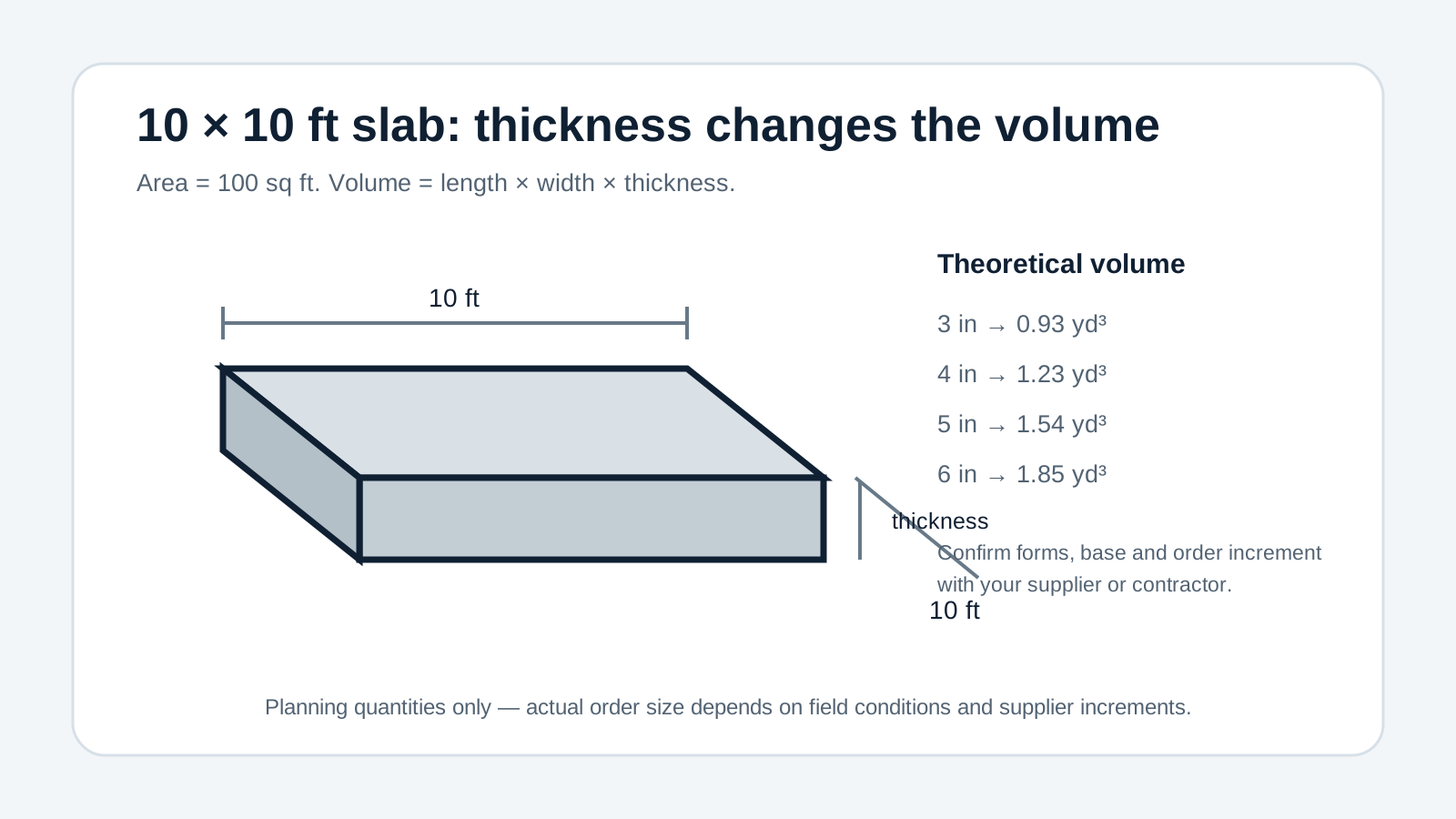
Concrete volume for a 10×10 slab
The basic calculation is length × width × thickness. Because thickness is usually entered in inches, convert it to feet before multiplying. Then divide cubic feet by 27 to convert to cubic yards.
| Slab thickness | Theoretical cubic feet | Theoretical cubic yards |
|---|---|---|
| 3 in | 25.0 ft³ | 0.93 yd³ |
| 4 in | 33.3 ft³ | 1.23 yd³ |
| 5 in | 41.7 ft³ | 1.54 yd³ |
| 6 in | 50.0 ft³ | 1.85 yd³ |
These are geometric quantities, not automatic order sizes. Forms can bow, the base may not be perfectly level, excavation can run deep in spots, and suppliers may sell in specific increments.
Worked example: 10×10 slab at 4 inches
A 4-inch thickness equals 4 ÷ 12 = 0.333 feet. Multiply 10 ft × 10 ft × 0.333 ft to get about 33.3 cubic feet. Divide by 27 and the theoretical result is approximately 1.23 cubic yards.
If you were using a hypothetical 10% planning allowance, 1.23 × 1.10 would be about 1.36 cubic yards. Do not treat 10% as a universal rule. The practical allowance should reflect the accuracy of the forms, subgrade, project shape and supplier guidance. Our extra concrete planning guide explains the tradeoff.
How to choose the slab thickness
Do not choose thickness only because one option uses less concrete. Slab use, soil and base conditions, reinforcement, joints, loads and local requirements can affect design. A lightly used walkway and a vehicle-supporting slab do not have the same structural demands.
If the slab is structural, load-bearing, exposed to unusual soil conditions or subject to code requirements, use a qualified professional's design rather than an online quantity estimate.
Ready-mix or bagged concrete?
At roughly 1.2 to 1.9 cubic yards, a 10×10 slab sits in a range where the buying method deserves comparison. Bagged concrete can avoid truck-delivery logistics, but the number of bags and the mixing workload grow quickly. Ready-mix can provide one consistent batch and faster placement, but delivery minimums, short-load fees and access may affect cost.
To estimate bag count, use required cubic feet ÷ the yield printed on the bag. For example, if a specific product label states a yield of 0.60 cubic feet per bag, a 4-inch slab's theoretical 33.3 cubic feet would require about 56 bags before any allowance. Always use the actual yield printed by the manufacturer for the product you plan to buy.
See Ready-Mix Concrete vs Bags for a fuller comparison.
Base preparation can change the real quantity
Concrete quantity assumes the underside of the slab is where you planned it to be. Low spots in the base increase concrete depth. Before ordering, check the form dimensions and several depth points across the pour. Correcting the base can be cheaper and more predictable than filling unexpected depressions with concrete.
Do not forget thickened edges, footings or steps
A simple 10×10 rectangle calculation does not include extra volume for thickened perimeter edges, integral footings, grade beams, steps or ramps. Calculate those shapes separately and add them to the slab volume. The Cubic Yard Calculator can help with additional rectangular volumes.
Ordering checklist
- Measure the inside dimensions of the forms.
- Check planned thickness at several points.
- Calculate any thickened edges or footings separately.
- Decide on an allowance based on field conditions rather than habit.
- Confirm the supplier's minimum order, delivery increment and return policy.
- Make sure access, labor and finishing tools are ready before the truck arrives.
Frequently asked questions
How many yards for a 10×10 slab at 4 inches?
The theoretical volume is about 1.23 cubic yards. The actual order may be higher depending on field conditions and supplier increments.
How many yards for a 10×10 slab at 6 inches?
The theoretical volume is about 1.85 cubic yards before any ordering allowance.
How many 80-lb bags do I need?
Use the yield listed on the exact bag you plan to buy. Divide the required cubic feet by that stated yield, then account for your chosen allowance. Bag yields vary by product, so avoid using one generic count for every mix.
Should I always order 10% extra?
No. Ten percent is a common planning example, not a universal requirement. Form accuracy, base condition, shape, supplier increments and the consequences of running short should guide the final allowance.